Routines & How-To · Journal
Why Does Flying Dry Out Your Skin? A Simple In-Flight Skincare Routine
Why does your skin feel tight or dry after flying? Discover how low aircraft cabin humidity affects skin hydration, what scientific research reveals and how to build a simple skincare routine before, during and after your flight.
There is something undeniably exciting about travelling. A change of scenery, a new destination and the anticipation of time away can make even a long journey feel worthwhile.
Your skin, however, may experience the flight rather differently.
After several hours in an aircraft cabin, your face might feel unusually tight, your lips may become dry and fine lines can appear more noticeable.
These sensations are not simply the result of travel fatigue. The unusually low humidity inside aircraft cabins can affect the moisture content of the skin’s surface.
Fortunately, maintaining skin comfort while flying does not require an elaborate collection of products.
A few carefully chosen essentials, applied thoughtfully, can help make your journey more comfortable.
Why Does Flying Make Your Skin Feel Dry?
Aircraft cabins have significantly lower humidity than most indoor environments.
According to the US Centers for Disease Control and Prevention, cabin humidity is commonly around 10–20%.
This dry environment can affect the skin’s outermost layer, known as the stratum corneum.
The stratum corneum plays an important role in maintaining hydration and regulating water loss.
When the surrounding air contains relatively little moisture, the skin may lose water more readily, contributing to feelings of tightness and dryness.
A 2011 study published in Skin Research and Technology investigated skin hydration during long-distance flights.
The researchers monitored eight women and found that cabin humidity fell below 10% during the flights. Skin-surface hydration decreased, with particularly noticeable changes on the cheeks.
The study was small and did not test skincare products, so its findings should not be interpreted as evidence for any particular moisturiser.
Nevertheless, it provides direct human evidence that the aircraft environment can affect skin hydration.
Does Flying Actually Dehydrate Your Skin?
It is useful to distinguish between surface skin dryness and dehydration affecting the entire body.
Low cabin humidity can reduce moisture in the skin’s outermost layers without necessarily causing significant systemic dehydration.
This explains why drinking extra water alone may not eliminate the sensation of dry skin during a flight.
Maintaining normal hydration is important for general wellbeing, but topical skincare addresses a different concern.
Moisturisers work directly at the skin’s surface.
They can contain ingredients that bind water, soften the skin and help limit excessive moisture loss.
For someone experiencing dryness during air travel, an appropriate moisturiser may therefore be more directly useful than simply drinking additional water.
What Should Your Pre-Flight Skincare Routine Include?
The most effective travel skincare routine is usually one that begins before boarding.
Rather than applying numerous products in your seat, prepare your skin using a few familiar formulations.
1. Begin With Gentle Cleansing
Start with a cleanser suitable for your skin type.
The aim is to remove makeup, sunscreen and impurities without leaving your skin feeling excessively tight.
Avoid vigorous scrubbing or very hot water.
If your skin is particularly sensitive, travelling is not necessarily the best time to experiment with unfamiliar cleansers.
A familiar product that your skin tolerates is generally a more sensible choice.
2. Consider a Hydrating Serum
A serum can provide an additional moisturising step when your skin benefits from it.
Ingredients such as glycerin and sodium hyaluronate are commonly included in facial serums because they help bind water.
Panthenol is another ingredient frequently used in moisturising and skin-conditioning formulations.
A serum is not essential for everyone, particularly if your moisturiser already provides sufficient comfort.
However, for people who enjoy a layered routine, it may be a useful addition before a long journey.
3. Follow With a Moisturiser
Moisturising is particularly relevant when you expect to spend several hours in dry cabin air.
A well-formulated moisturiser may contain several complementary ingredient categories.
Humectants, such as glycerin, help bind water.
Emollients, including shea butter and certain cosmetic oils, improve the skin’s surface feel.
Other ingredients, including dimethicone, can contribute to skin conditioning and the physical properties of a moisturising formulation.
The objective is not to apply the thickest cream available.
Choose a texture that suits your skin and remains comfortable throughout the journey.
4. Apply Sunscreen When Appropriate
Sun protection should remain part of your travel routine.
UVA radiation can pass through aircraft windows, making protection relevant during daytime flights, particularly when seated near a window.
The American Academy of Dermatology recommends broad-spectrum, water-resistant sunscreen with SPF 30 or higher during travel.
Apply sunscreen according to its instructions, reapplying when appropriate, and lower the window shade where possible.
Moisturising skincare should not be mistaken for sun protection unless the finished product carries a verified SPF claim.
What Should You Do During a Long Flight?
Once aboard, the priority is maintaining skin comfort rather than introducing an entirely new beauty routine.
If your skin begins to feel dry, a small amount of a familiar moisturiser may help.
Wash or sanitise your hands before touching your face.
Avoid repeatedly cleansing or rubbing your skin, especially if it already feels uncomfortable.
You may also wish to carry a suitable lip balm, as the lips can become particularly dry during travel.
For a daytime flight with meaningful sunlight exposure, maintain appropriate sunscreen coverage.
Do You Need a Facial Mist or Sheet Mask?
Facial mists and sheet masks are frequently associated with in-flight skincare.
They can feel refreshing, but they are not essential.
A water-based mist may provide temporary comfort, yet the sensation can be short-lived as the applied moisture evaporates.
If you enjoy using a mist, consider following it with a suitable moisturiser rather than relying on the mist alone.
Sheet masks can also introduce unnecessary complexity, particularly when travelling in a shared cabin.
For most people, an uncomplicated routine using familiar products will be entirely sufficient.
Which Skincare Ingredients Are Useful for Flying?
Rather than searching for products marketed specifically for aircraft travel, focus on established moisturising functions.
Glycerin and sodium hyaluronate are humectants that help support hydration.
Panthenol is commonly used for its moisturising and skin-conditioning properties.
Shea butter and other emollients can contribute to skin softness and comfort.
Dimethicone is another widely used cosmetic ingredient that can help create a smooth, conditioned skin feel.
These ingredients work in different ways and can be combined within one formulation.
However, the presence of an ingredient does not guarantee that a finished product has been clinically tested for preventing flight-related dryness.
The complete formulation and your individual skin tolerance remain important.
A Considered Travel Routine With Caviar of Switzerland
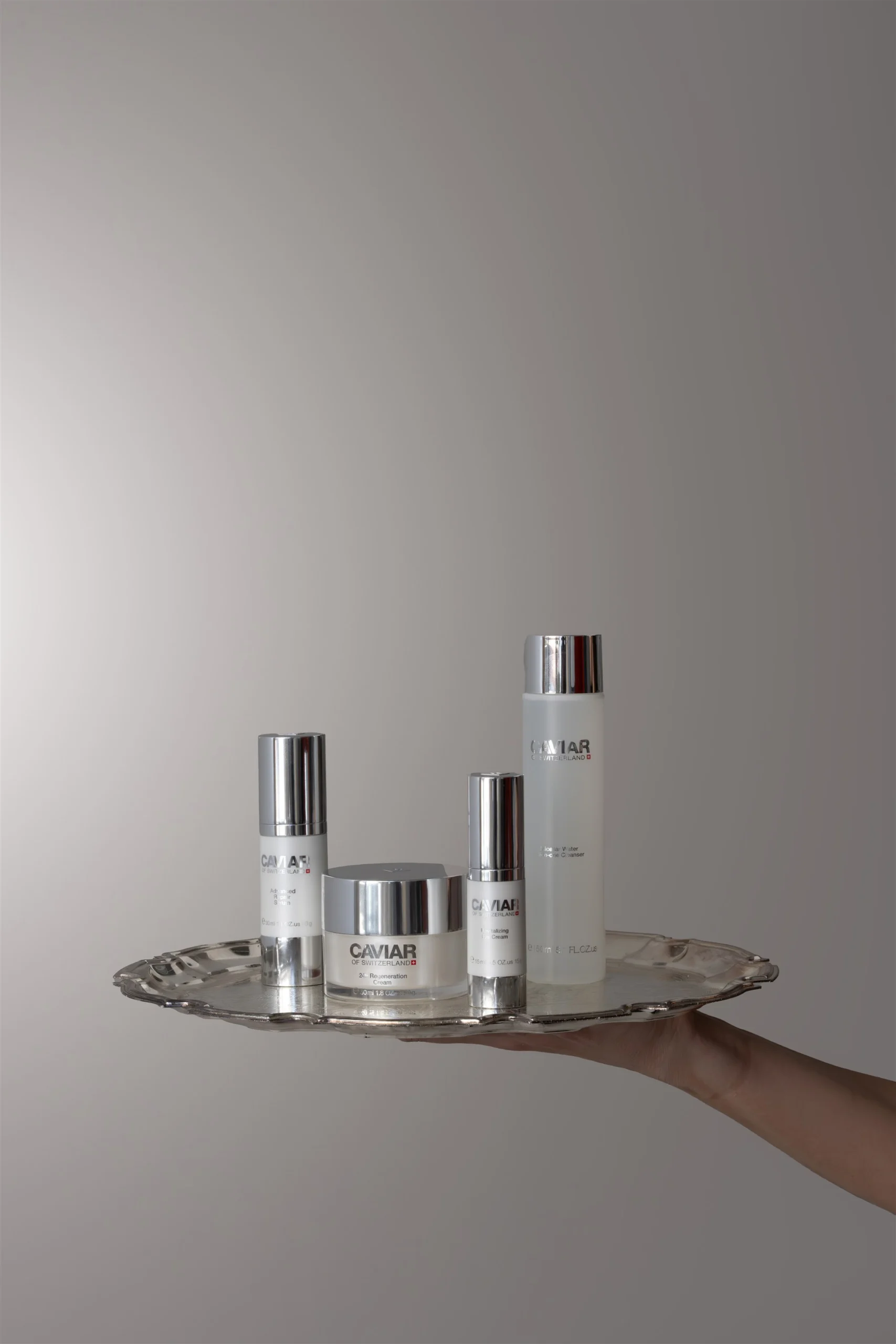
For those who prefer a refined, uncomplicated skincare ritual, two Caviar of Switzerland products can be incorporated into a moisturising routine before travel.
The Advanced Repair Serum contains glycerin, panthenol and sodium hyaluronate, alongside other skin-conditioning ingredients.
These are commonly used in cosmetic formulations designed to support hydration and skin comfort.
The serum can be followed by the 24h Regeneration Cream, which includes glycerin, shea butter, dimethicone, panthenol and sodium hyaluronate.
These ingredients illustrate the combination of water-binding and emollient components found within a moisturising cream.
Both products should be applied according to their instructions, avoiding the immediate eye area.
They also contain fragrance, so people with known fragrance sensitivities should assess the complete ingredient declarations.
Their published ingredient lists do not establish that they have been clinically evaluated for preventing dryness during flights.
The value of this routine lies in incorporating familiar moisturising formulations into an already considered approach to skincare.
Can You Take Your Skincare Products in Hand Luggage?
Packing skincare requires some attention to airport security rules.
The Advanced Repair Serum is supplied in a 30 ml container, while the 24h Regeneration Cream is supplied in a 50 ml container.
Both are within the common 100 ml individual-container limit used at many airports.
However, airport rules vary.
Some UK airports now permit larger liquid containers, while others maintain the traditional 100 ml restriction.
The UK government’s current hand-luggage guidance recommends checking the requirements for your departure airport and any transit or return airports.
Creams, serums, lotions and other cosmetic liquids are generally subject to these requirements.
Remember that container capacity matters: a 150 ml bottle containing only a small amount of product may still exceed the limit at airports enforcing the 100 ml rule.
Keeping your routine compact can therefore be useful for both convenience and packing.
What Should You Do After Landing?
After arriving, return to your normal skincare routine.
If your skin feels dry, cleanse gently when needed and apply a suitable moisturiser.
Avoid introducing strong exfoliating products simply because your complexion appears dull after a flight.
Temporary dryness does not necessarily indicate that your skin requires intensive treatment.
If you are travelling to a colder or drier destination, you may wish to adjust the richness or frequency of your moisturising routine according to how your skin feels.
For further guidance, explore our Ultimate Guide to Hydrated Skin Throughout the Year.
Frequently Asked Questions
Should I drink extra water to prevent dry skin on a plane?
Maintain normal hydration, but drinking additional water is not a substitute for topical moisturising.
The dry cabin environment primarily affects moisture at the skin’s surface.
Should I apply moisturiser during the flight?
You can reapply a familiar moisturiser if your skin feels dry or uncomfortable.
There is no universal application interval necessary for everyone.
Is a serum necessary for long flights?
No. A serum is optional.
A suitable moisturiser and appropriate sun protection may be sufficient, depending on your skin’s needs.
Can I use retinol or exfoliating acids before flying?
If these products already cause dryness or irritation, consider avoiding unnecessary application around the journey. Do not stop prescribed treatments without medical advice.
The Final Word: Travel Light, Care Thoughtfully
Air travel exposes the skin to a particularly dry environment, but maintaining comfort does not require an elaborate routine.
Gentle cleansing, appropriate moisturising and consistent sun protection provide a sensible foundation.
The most important consideration is choosing products that suit your skin and using them consistently, rather than introducing multiple unfamiliar treatments before departure.
At Caviar of Switzerland, we believe that a refined skincare ritual should be as practical as it is enjoyable, whether at home or travelling somewhere new.
Explore our Advanced Repair Serum and 24h Regeneration Cream as part of a considered daily moisturising routine.